

By Michelle Drewek
Digital Media Manager, Lessiter Media
mdrewek@lessitermedia.com
262-777-2435
There's plenty of information out there about the dangers of AI, but there is also plenty of good to be had as well. I've walked you through the good case uses and the risks to be aware of in past Marketing Minutes, but today I'm here to help you think about how you are protecting yourselves internally. I know, who wants more paperwork and policies... but a proactive AI policy is not optional — it is a foundational component of responsible business operations.
As AI tools become more accessible and integrated into daily workflows, companies must establish clear guidelines for their use. An internal AI policy provides a structured framework that helps employees understand appropriate use, data security requirements, ethical considerations, and compliance obligations. Without defined standards, organizations risk inconsistent practices, data breaches, legal exposure and reputational harm.
At Lessiter Media, we established an AI policy that all team members must follow and sign. It lays out exactly what we expect in terms of AI usage and explains why the compliance is necessary. A well-crafted AI policy not only mitigates risk but also empowers teams to innovate responsibly. By setting expectations around transparency, accuracy, intellectual property, and human oversight, you can leverage AI effectively while protecting your team, your clients and your brand.
More visibility. More credibility. More engagement.
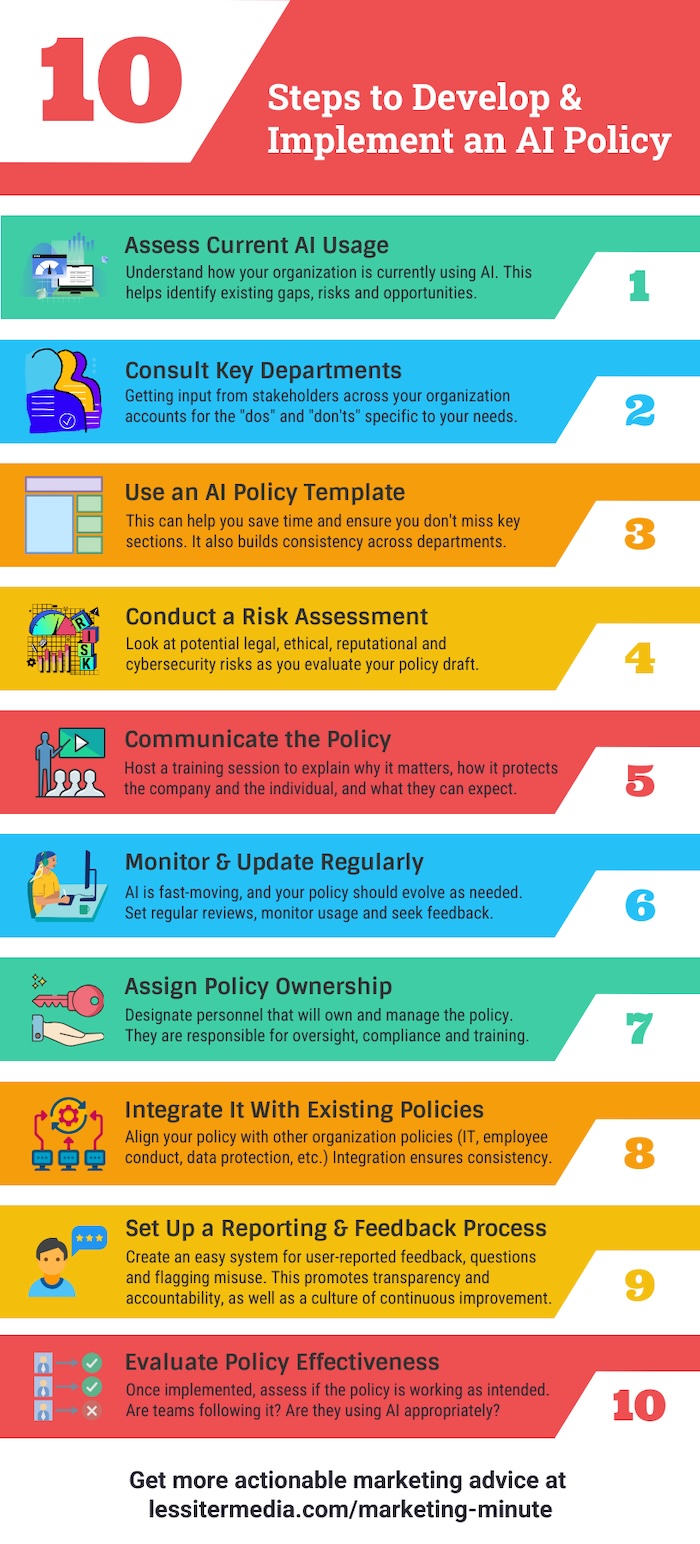
Below are 10 steps to help you develop and implement an AI policy. You can find a great template to help guide you through this process at AIHR.com — but please reach out if you'd like more information from our team. As always, we are happy to assist you!
lelessiles